
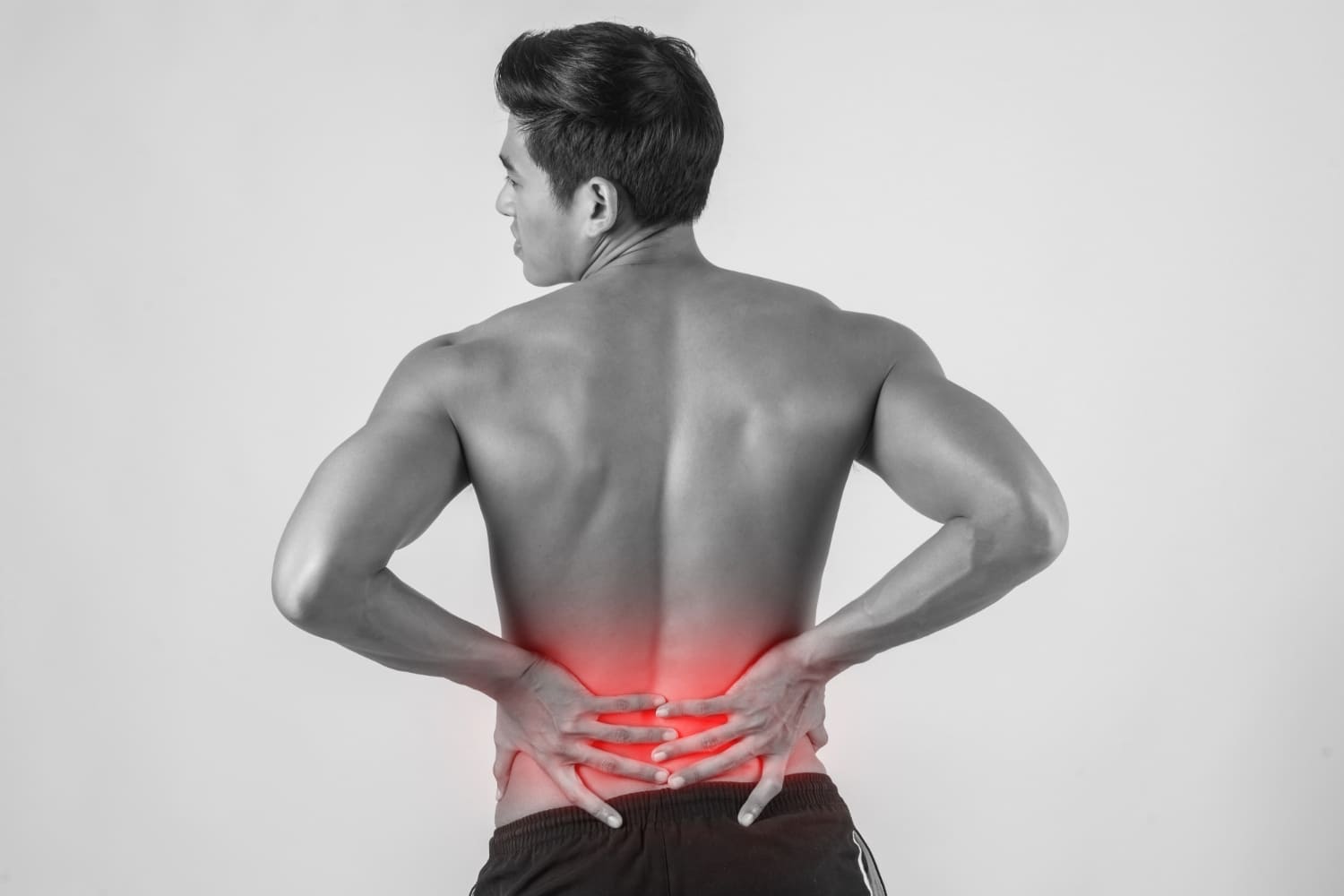
Lower back pain is one of the most common problems in the world. It affects most adults at some point in their lives. It is also the most frequent reason most people visit an orthopaedician.
What causes lower back pain?
The lumbar region of the spine constitutes your lower back. The lumbar region carries the weight of the upper body, which puts it under a lot of stress. The lumbar vertebrae, along with the discs in between them, allow the spine to absorb this stress and allow movements safely.
Acute Lower back pain can be caused by many factors, most commonly an injury to the muscles and tendons of the lower back or a muscular sprain.
Most of the chronic back pain is “non-specific” (there’s no obvious cause) or “mechanical” (the pain originates from bones, joints or soft tissues in and around the spine. Sometimes, it is due to diseases such as spinal cancer, bone tuberculosis, and other medical conditions.
· Slipped (Prolapsed) disc – The discs between the vertebrae press on a nerve, causing pain, numbness, tingling, or weakness
· Sciatica – Irritation of the sciatic nerve that runs from the lower back to the feet. It causes pain and numbness in the legs and feet.
· Spondylolisthesis –the vertebra slips out of its position, causing pain and stiffness.
· Osteoporosis – Weak vertebrae
Treatment
Low back pain is treated with a Step-up approach, starting with non-invasive and home treatment and then increasing to hospitalization and invasive treatment.
Initial treatment consists of :
- Hot fomentation of the back – it relaxes the spastic muscles and helps in relieving the pain.
- Resuming activities as soon as possible helps in relieving pain. Bed rest is not recommended.
- Exercises to strengthen the core and abdominal muscles are very important.
- While sleeping, try lying in a curled-up (fetal position) with a pillow between your legs. If you sleep on your back, place a pillow or rolled towel under your knees.
- Medications – Initially, the treatment is started with analgesics, muscle relaxants, and supplements. If the pain is still not relieved, then opioid analgesics may also be used.

Prevention
· Exercise regularly to keep muscles strong and flexible.
· Maintain a healthy weight and eat a nutritious diet rich in calcium and vitamin D.
· Switch sitting positions often and walk around the office with gentle stretching to relieve tension. Using a lumbar support on the chair also helps.
· Wear well-cushioned shoes.
· It is advisable to sleep in a curled-up (fetal) position with a pillow between your legs. If you have a habit of sleeping on your back, place a pillow or rolled towel under your knees.
· Smoking alters blood flow to the spine, which can cause disc degeneration and osteoporosis. Hence, smoking is also a risk factor for low back pain, and it is advisable to quit smoking.
· While lifting objects, follow correct posture (refer to pic). Avoid lifting very objects alone.