
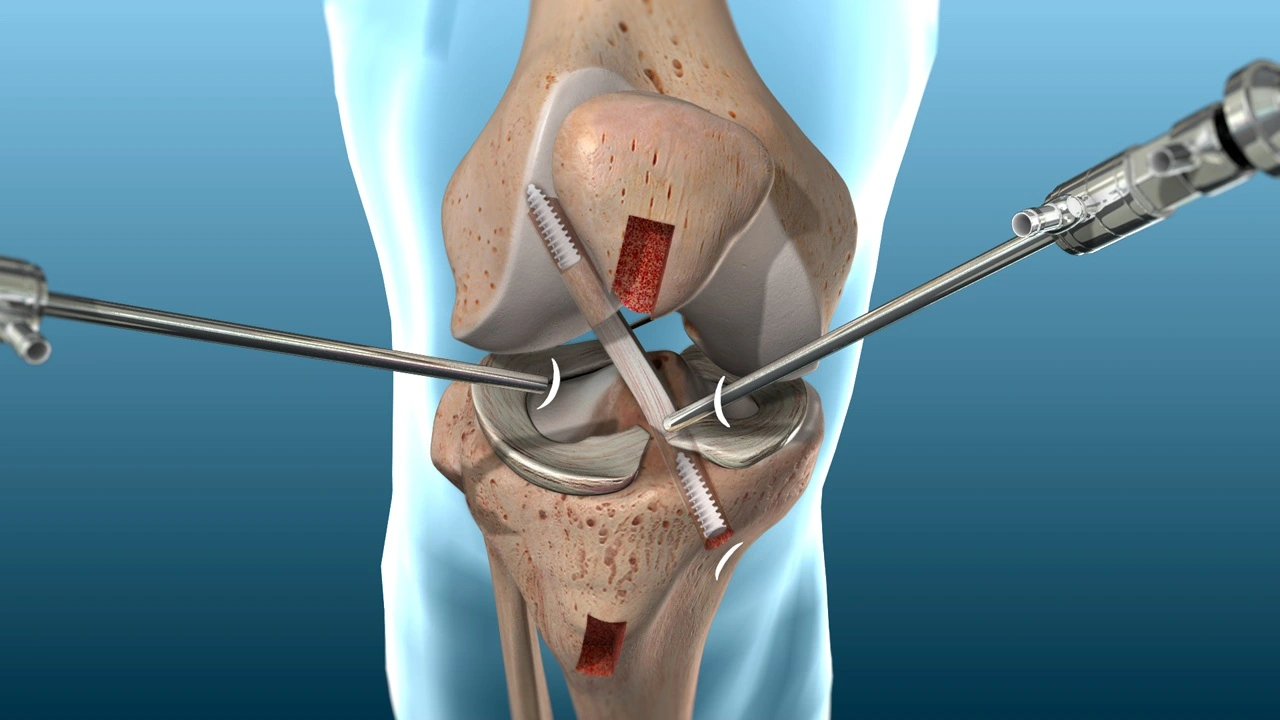
The Anterior Cruciate Ligament (ACL) is crucial in the knee. It connects the thigh bone (femur) with the shin bone (tibia) inside the knee. The ACL is one of the primary stabilizers of the knee, preventing excessive knee movements.
Grading of ACL Injury
Many ACL injuries are associated with concurrent damage to other structures inside the knee, such as cartilage, meniscus, or other knee ligaments.
ACL injury is classified into Grades depending on the severity of the injury.
Grade 1 Sprain: It is a minor injury. The ligament is mildly damaged. The ACL is slightly stretched but can keep the knee joint stable.
Grade 2 Sprain: The ligament is stretched more to the point it may be termed loose. Sometimes, partial ACL tears also fall under this category.
Grade 3 Sprain: The knee is unstable in this condition. The ACL is wholly torn, which can happen in the middle of the ligament or can be pulled from its bony attachment.
Symptoms of ACL injury
When your knee is injured, you might hear a popping sound. Within 24 hours, your knee will swell due to the bleeding inside, and you will experience pain. You will also have difficulty moving your knee and may be unable to put your total weight on it. There will be pain and swelling in your knee, which will subside over time. While doing daily activities and exertion, the knee will feel unstable, i.e., a sensation of ‘giving way.’
How will the doctor check your ACL Tear?
The doctor will examine your detailed history to check whether your ACL is torn. He will perform these tests:
Lachmann Test: In this test, the doctor pulls the chin bone away from the thigh bone. If the ACL is torn, the chin bone moves a lot.
Pivot Shift test: in this test, the doctor lifts your leg and applies rotational pressure on the knee. In case of an ACL tear, the bones will tend to shift.
Your doctor will perform other tests to confirm the diagnosis and to check for other associated injuries that may require additional treatment.
X-rays: X-rays are done to rule out any fracture in or around the knee. X-rays also show ACL injuries where the ligament is torn with a piece of bone.
MRI is the investigation of choice to diagnose ACL injury. Whether the patient has a complete tear or a Grade 1 sprain, MRI diagnoses the meniscus and cartilage injuries, which may require additional treatment.
What are the treatment options for an ACL tear?
The factors that decide the treatment include the patient’s age, activity level, and the presence or absence of any associated injury. The goal of the treatment is to have a stable knee. An unstable knee damages the meniscus and cartilage, leading to knee arthritis. In young, active individuals, ligament reconstruction is done to stabilize their knees. In older people with sedentary lifestyles, non-operative treatment can be considered.
When should you get ACL surgery?
ACL reconstruction surgery for a complete ACL tear is generally scheduled 3-6 weeks after injury. This is done to make the pain and swelling subside and for the movements of the knee to recover. If surgery is done in the acute phase, there is an increased chance of scarring inside the knee, a complication known as Arthrofibrosis.
Your surgeon may consider other factors in deciding the timing of surgery, such as:
· Presence/Absence of other injuries
· amount of swelling and pain in the knee
· Movements of the knee
· Any injury that needs urgent treatment, such as a locked knee.
Anesthesia
Different types of anesthesia can be given depending on the fitness and comfort of the patient.
· Spinal Anesthesia: The medicine is injected directly into your lower spine. You will become numb below your waist, but you will be awake. It is also called regional anesthesia.
· General Anesthesia: You are given some medicines through injections and are made to inhale some gases. In this anesthesia, you will be asleep and pain-free.
· Regional Nerve Block: Pain medicine is injected around your groin and thigh nerves. This blocks out pain and reduces the need for general anesthesia.
Surgical Procedure
Arthroscopy surgery involves reconstructing a new ACL using a patient’s graft. The graft can be taken from the hamstring, quadriceps, peroneus, or patella tendon. Tiny cuts are used, and the surgery is done via camera.
Once the surgeon examines the inside of the knee, the cartilage and meniscus injuries (if any) are addressed first. The graft is then taken from the patient’s body and prepared to mimic the natural ACL’s length and size. In the most common technique for ACL reconstruction, the surgeon drills tunnels in the femur and tibia and passes the graft in both tunnels. The graft is held under tension and is attached via fixation devices such as endobuttons or screws.
What is the recovery time after ACL surgery?
After the surgery, an anti-inflammatory is started to decrease pain and swelling in the knee. Cold compression is also encouraged, which helps further. The patient is made to walk the next day with the help of a brace.
The patient is started on a rehabilitation protocol to restore balance, strength, and movement in the knee. It usually starts a day after surgery with knee bending and quadriceps strengthening exercises.
Arthroscopic techniques for ACL reconstruction have made recovery very fast, and patients can start their daily activities very early. The surgery makes the knee stable and prevents it from further damage. It is also essential that the patient follows the rehabilitation protocol given by the surgeon.